
Katha grantha
Devi Katha
देवी कथा
Three battles, many peethas, one refusal to fake the map
Śākta chapters that honour Devi Māhātmya while refusing a fake GPS of Sati’s body.
Chapter 1
Three episodes inside one hymn
देवी माहात्म्य
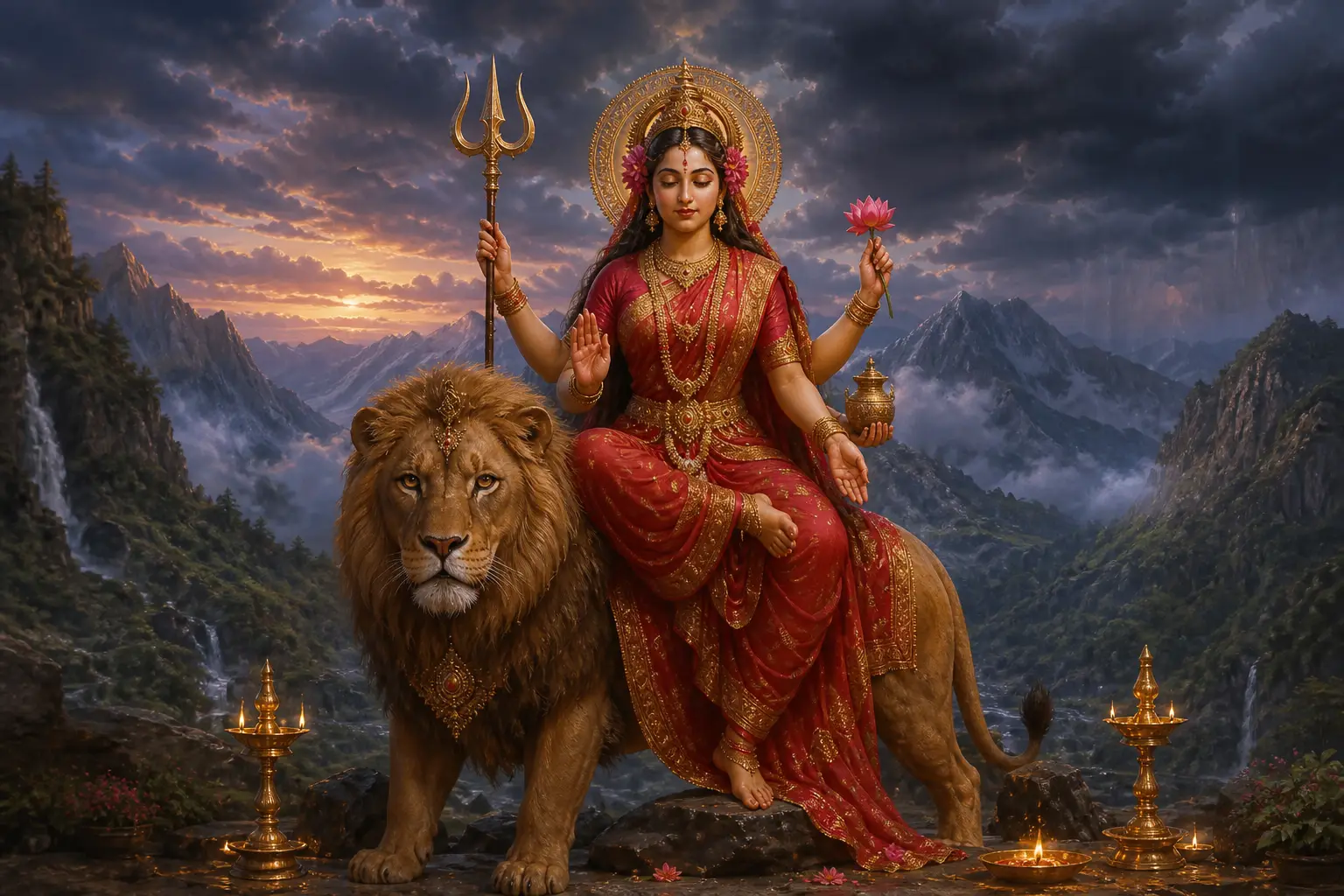
The Devī Māhātmya, nested in the Mārkaṇḍeya Purāṇa, is not a single battle report. It is three rising storms: Madhu-Kaitabha, Mahiṣāsura, and Śumbha-Niśumbha. Each time, the Goddess gathers the powers of the gods into one clarity that can cut confusion.
Readers who only know ‘Durga on a lion’ miss the hymn’s psychology: fear organises itself as a buffalo demon, pride as a pair of brothers, and sleep as a cosmic threat. The sword is insight with courage. Autumn’s nine nights recite this grammar aloud across India.
Garba circles in Gujarat, Durga Puja pandals in Bengal, and mountain processions in Himachal are not copies of one another. They are regional bodies dancing the same hymn’s heat.
- Devi Mahatmya / Markandeya Purana (tradition)
- Regional Sharad Navaratri living custom
Ask about this section
Devi Katha · Three episodes inside one hymn
Names the people and the event in this section, then says what the page does not include. It will not invent missing verses.
Chapter 2
Sati’s grief and the problem of lists
सती · पीठ
When Sati leaves her body at Daksha’s insulted yajña, Śiva’s grief shakes the worlds. Later tellings say Viṣṇu’s discus scatters her limbs, and peethas rise where they fall. The story teaches that the sacred feminine is not confined to one palace.
Printed books love the number fifty-one. Living India disagrees about sites. Some famous yatras are not peethas at all. Hind AI indexes places we can locate, then labels common peetha, disputed assignment, or major yatra — so learning does not require lying.
Kamakhya on Nilachal, for example, is a living centre of Assamese Śākta calendar with Ambubachi’s yearly closing. That is geography and custom you can check — beside the katha, not underneath it.
- Daksha-yajna / peetha origin motif (tradition)
- Hind AI Devi tirtha index and list-status labels
Ask about this section
Devi Katha · Sati’s grief and the problem of lists
Names the people and the event in this section, then says what the page does not include. It will not invent missing verses.
Chapter 3
Blood, flowers, and asking the shrine
उपचार
Some peethas historically knew blood offering; many urban Durgā spaces are strictly vegetarian. Both facts can be true in one civilisation. The error is importing one district’s rule into another’s sanctum without asking.
Navaratri etiquette is practical holiness: cover shoulders where asked, respect photography bans, keep late-night garba safe, and never treat the Goddess as a costume prop.
When the nine nights end in Vijayadashami, victory is not cruelty. It is clarity that refuses to let chaos wear the crown.
- Living Shakta temple variance on offerings
- Hind AI /festivals/sharad-navaratri and /festivals/vijayadashami
Ask about this section
Devi Katha · Blood, flowers, and asking the shrine
Names the people and the event in this section, then says what the page does not include. It will not invent missing verses.