
Katha grantha
Mahadeva Katha
महादेव कथा
From cosmic stillness to twelve lights on the map
Shaiva chapters for learners who want story depth without fake GPS certainty.
Chapter 1
The one who sits when worlds shake
स्थिरता
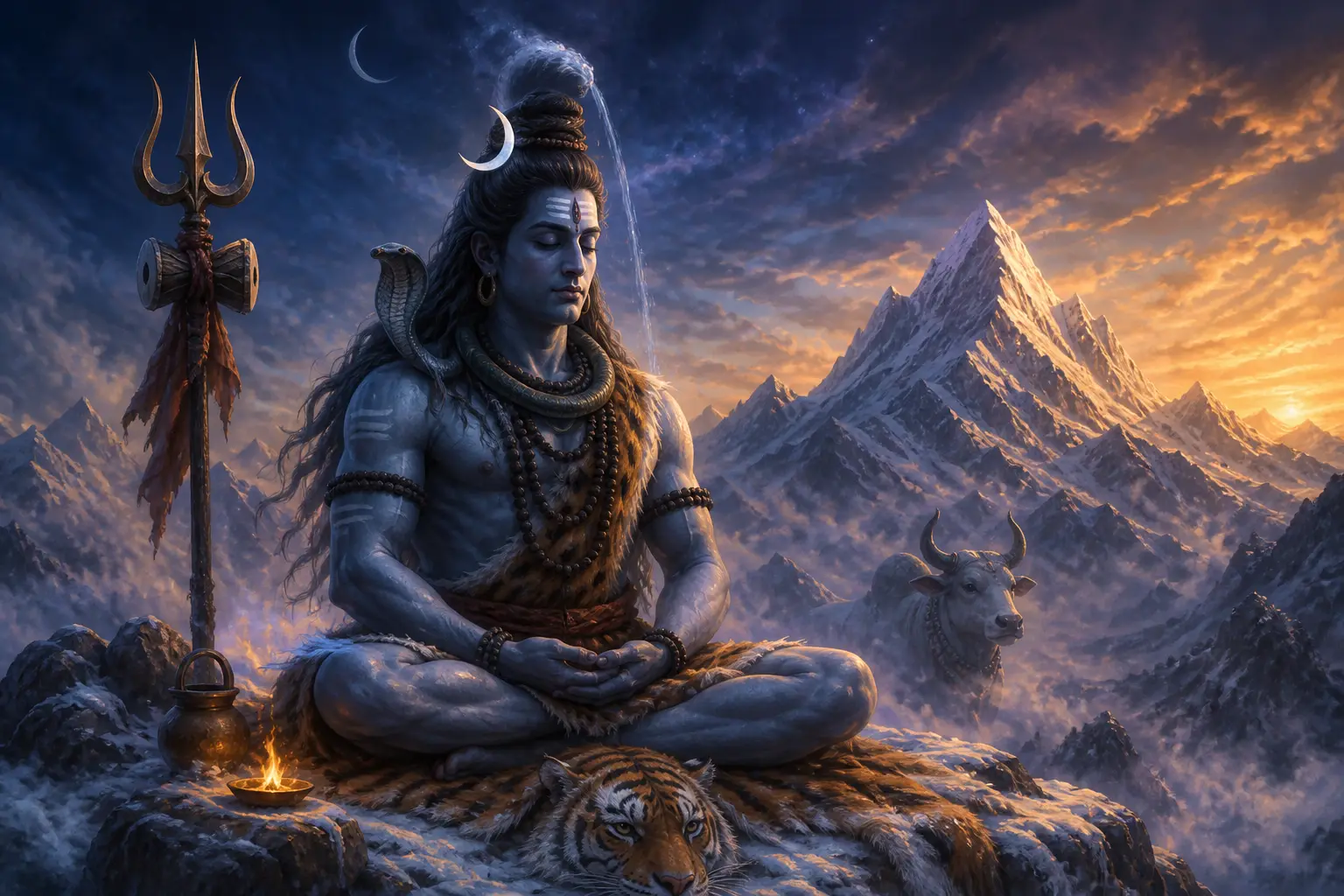
Before temples had clocks, Shaiva imagination already had a posture: Śiva seated, spine like a mountain, eyes half-open. The stories do not begin with a résumé. They begin with a stillness that can hold poison, dance, and teaching without becoming chaos.
When Purāṇic tellings speak of the ocean’s churning, poison rises before nectar. Gods and asuras panic. Śiva drinks. The throat turns blue — Nīlakaṇṭha — and the worlds continue. Read this as a theology of responsibility under crisis: someone absorbs the cost so others may live. It is not a chemistry experiment.
That same stillness becomes the Himalaya’s silence in later poetry, the ash-smeared ascetic at the cremation ground, and the householder who blesses marriage. Shaivism refuses a single costume. The god who drinks poison also weds Pārvatī; the dancer who shreds worlds also teaches as Dakṣiṇāmūrti under a banyan.
- Shiva Purana Samudra Manthan / Nilakantha motifs (tradition)
- Living Shaiva iconography: ascetic, householder, teacher, dancer
Ask about this section
Mahadeva Katha · The one who sits when worlds shake
Names the people and the event in this section, then says what the page does not include. It will not invent missing verses.
Chapter 2
Linga of light — and why twelve names travel
ज्योतिर्लिङ्ग
A jyotirliṅga is a sign of radiance. The Shiva Purāṇa speaks of a column of light without beginning or end — a teaching against the ego that wants to measure the Absolute. Pilgrims later walk to twelve living temples whose names echo a stotra’s geography.
Somnath by the sea, Mallikarjuna in the hills, Mahakaleshwar where time itself is named, Omkareshwar on a river island, Kedarnath under snow — each place keeps its own rebuild history, altitude, and queue culture. The stotra is one song; the stones are many rebuilds.
Hind AI’s map therefore separates katha from cadastral fact. Where two towns claim one name, we name the dispute. The light of the story is not cancelled by honesty about roads, floods, and corridor rebuilds.
- Dwadasa Jyotirlinga stotra geography (tradition)
- Hind AI Jyotirlinga place pages — history labelled as history
Ask about this section
Mahadeva Katha · Linga of light — and why twelve names travel
Names the people and the event in this section, then says what the page does not include. It will not invent missing verses.
Chapter 3
The great night and the Monday vow
शिवरात्रि · सोमवार
Maha Shivaratri gathers India into one night of bilva, abhisheka, and wakefulness. Monthly Shivaratri and Pradosha twilight keep smaller drums beating through the year. Shravan Mondays turn North and West Indian lanes toward the linga with water pots and quiet resolve.
What not to do matters as much as what to chant: do not shove the sanctum, do not film forbidden rooms, do not treat the night as a party with alcohol at the threshold. Devotion that harms the queue harms the vow.
When you finish this chapter, open the festival page and the Mahadeva map. Story without geography becomes fog; geography without story becomes a tourist checklist. Hind AI keeps both on one platform.
- Living Maha Shivaratri / Shravan Monday custom
- Hind AI /festivals/maha-shivaratri
Ask about this section
Mahadeva Katha · The great night and the Monday vow
Names the people and the event in this section, then says what the page does not include. It will not invent missing verses.