
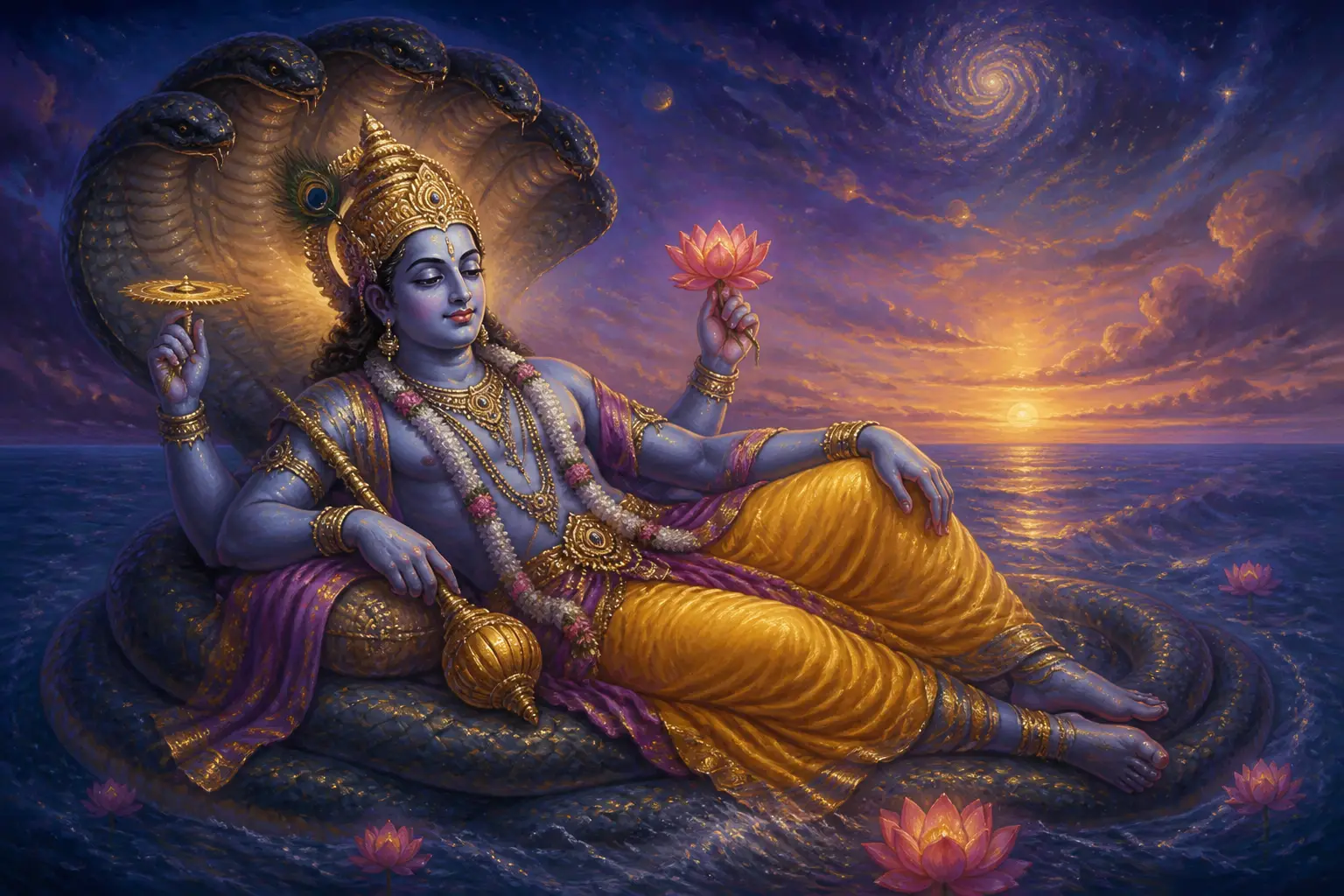
ॐ नमो नारायणाय · Vishnu
Four corners of the peninsula — Char Dham as places, not a slogan
Adi Shankara’s four-corners yatra is commonly listed as Badrinath, Puri, Dwarka, and Rameswaram. Uttarakhand’s smaller Char Dham (Yamunotri, Gangotri, Kedarnath, Badrinath) is a different circuit.
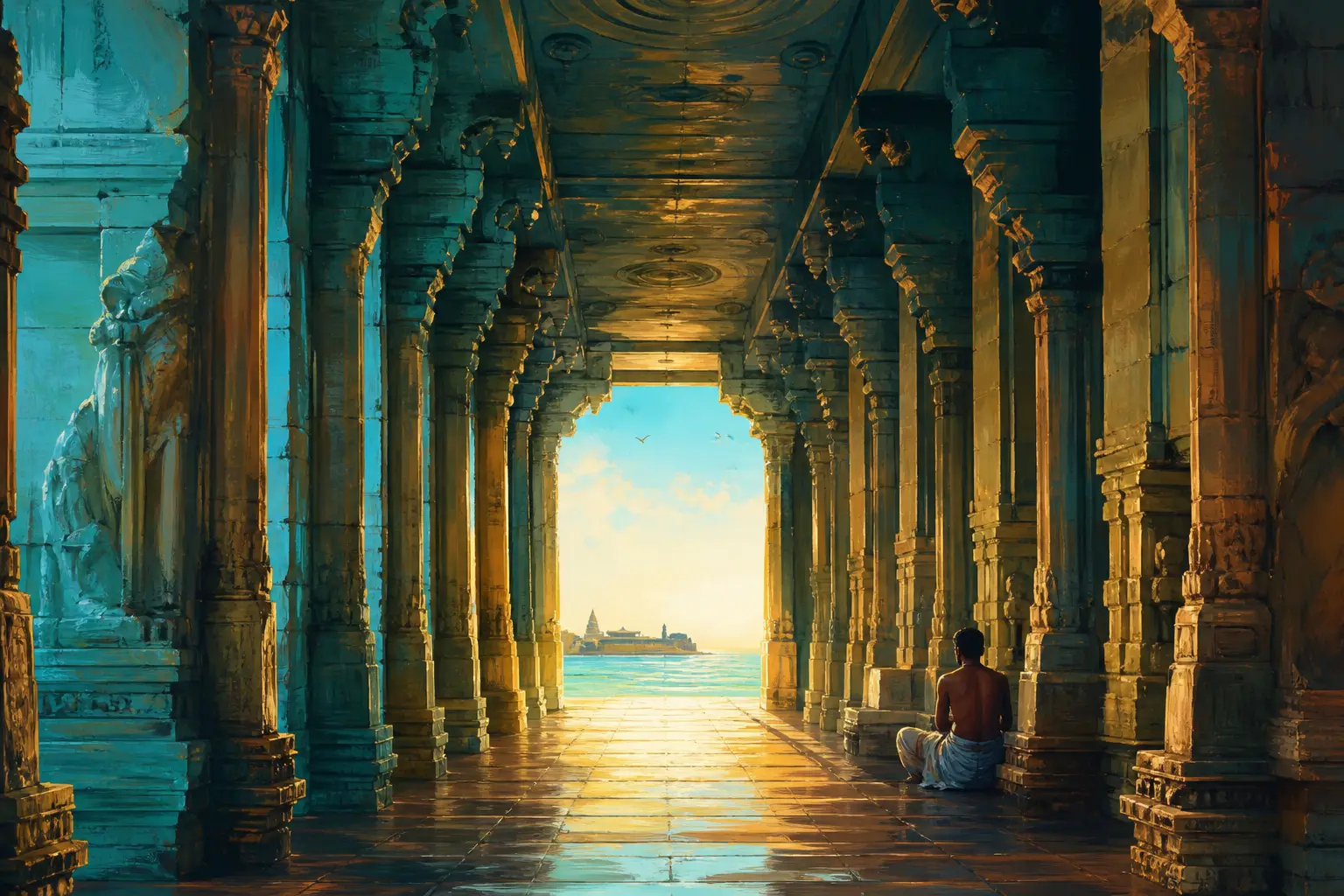
Artist impression · not a photograph of a living temple murti
Deeper Vaishnava knowledge
Depth without fake certainty — stories labelled as stories, places labelled as places.
Katha · tradition
Dashavatara — ten descents, many lists
Matsya, Kūrma, Varāha, Narasiṃha, Vāmana, Paraśurāma, Rāma, Balarāma or Kṛṣṇa, Buddha or Kṛṣṇa, and Kalki appear in classical lists with small variations. Avatāra means descent to restore dharma — Purāṇic theology, not a species tree.
Geography · checkable
Char Dham as a peninsula circuit
Badrinath (north), Dwarka (west), Puri (east), Rameswaram (south) mark a living Vaishnava map of Bhārat. Adi Shankara’s name is tied to the circuit in later memory; the temples themselves have distinct local histories and rebuilds.
Temple etiquette
Tulsi, shankha, and Vaishnava courtesy
Many Vaishnava temples prefer tulsi garlands and restrict onions/garlic prasad. Do not wear leather into certain mathas. Ask before photographing the garbhagriha. In Puri, trust local queues and kitchen rules — the Jagannath kitchen is a city unto itself.
Living practice
Ekadashi — twice a month, not once a year
The eleventh lunar day is a fasting and listening rhythm across Vaishnava homes. Rules differ (water, fruit, full fast). Pair it with Gītā or Bhāgavata reading rather than only calorie maths.
Fun fact
Fun fact — the word juggernaut
English ‘juggernaut’ comes from Jagannātha’s ratha. The Puri cart festival is still a living civic theology — wood, rope, and millions of feet — not a colonial metaphor alone.
Tradition
Story trail
- Shiva
- Devi
- Vishnu
- Ganesha
4 places · Natural Earth coastline · shrine GPS
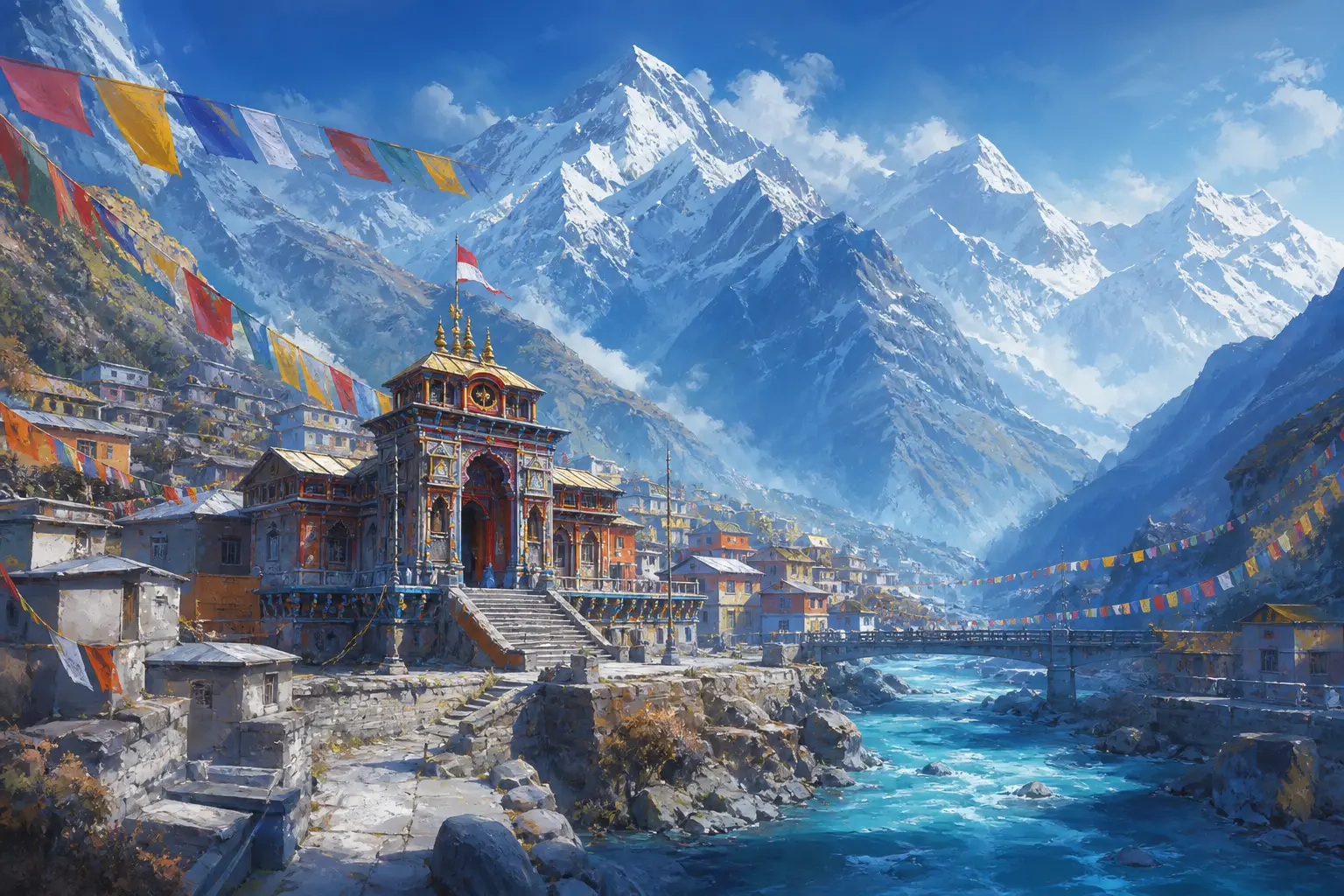
Char Dham 1
Badrinath
बद्रीनाथ
Badrinath, Chamoli
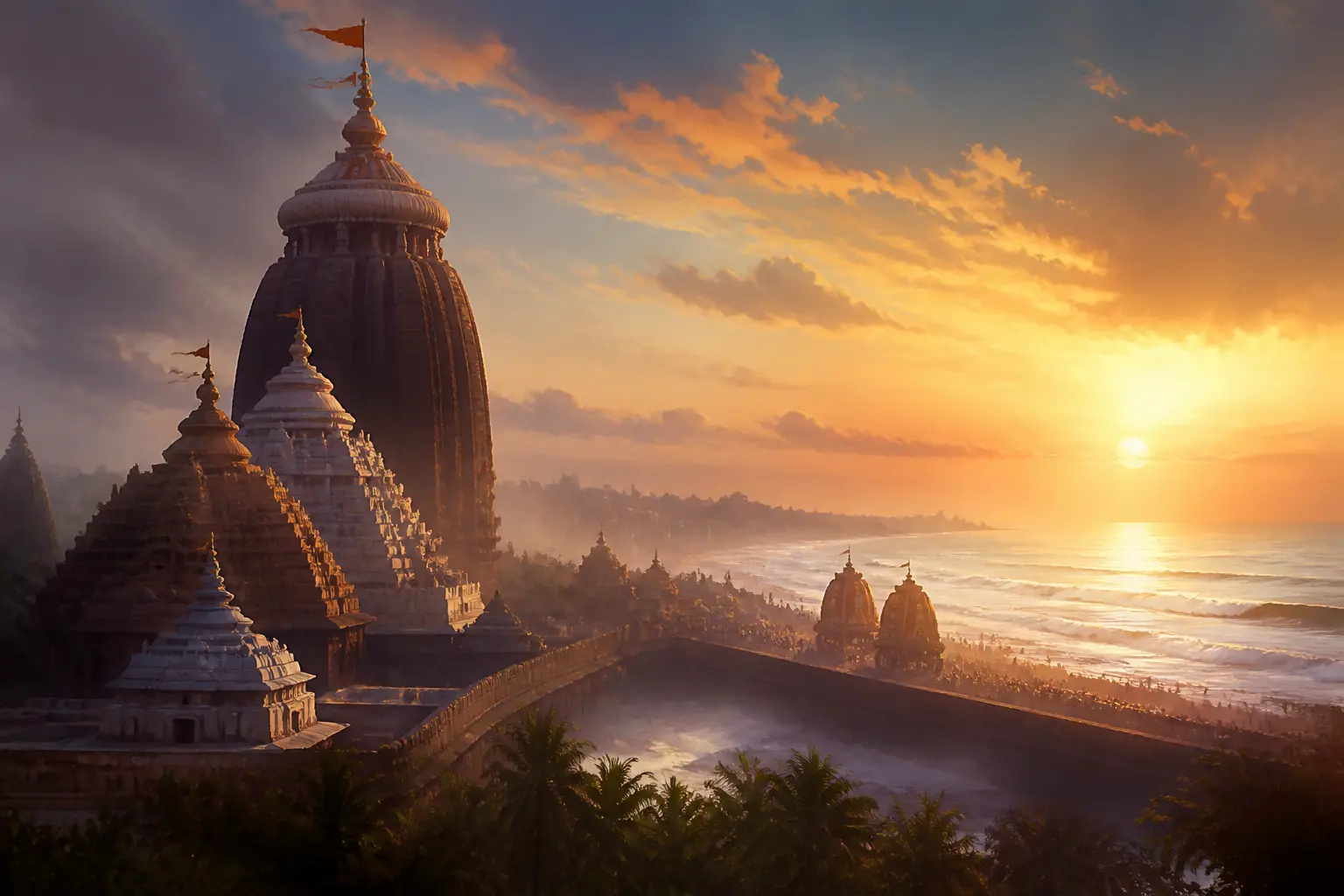
Char Dham 2
Puri Jagannath
जगन्नाथ पुरी
Puri
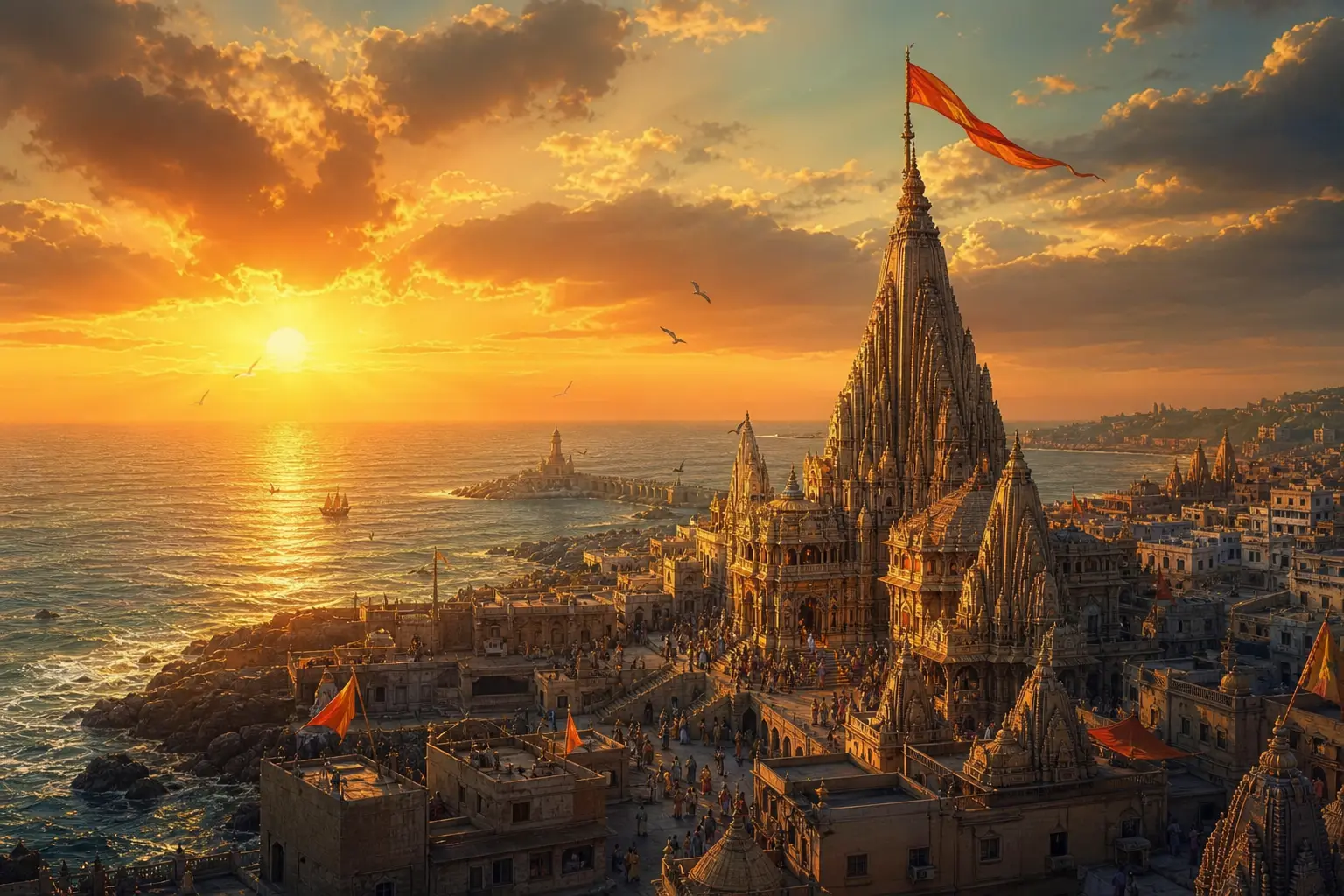
Char Dham 3
Dwarka
द्वारका
Dwarka
Char Dham 4
Rameswaram
रामेश्वरम्
Rameswaram Island
Keep reading
Char Dham is the map. Harivijay and Ramvijay are Shridhar’s Marathi pothis for Krishna and Rama; the Vishnu katha grantha stays the short English spine.