
Voice input is usually framed as accessibility or convenience. Those frames matter, but they understate the power-user version: fast capture, low friction, and high-quality cleanup across the places where work already happens.
This is a product-pattern analysis of dictation tools in the Wispr Flow style, cross-checked against Wispr’s public privacy documentation where claims get specific. Where vendor internals are not public, I mark judgments as my read.
Reader promise: You will learn how voice input becomes a serious workflow tool when it captures intent—and when privacy settings match how the audio actually flows.
Fast Context
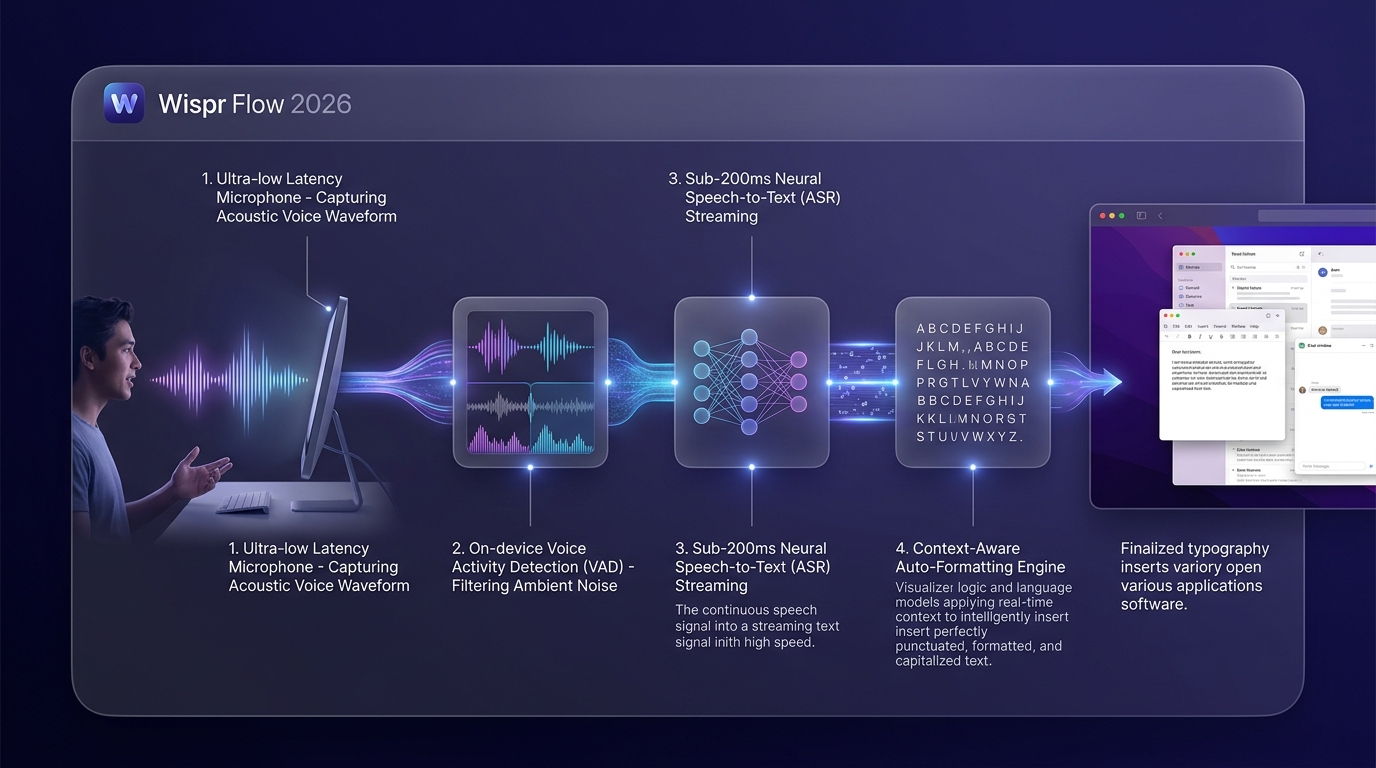
The keyboard is still the precision instrument. Voice wins when the bottleneck is getting rough intent out of your head: first drafts, status updates, bug reports, meeting notes, long-form thinking while walking. The product challenge is not transcription alone. It is correction, formatting, privacy, destination awareness, and preserving tone.
Important factual grounding from Wispr’s published Data Controls (as of mid-2026 docs): transcription runs in the cloud for accuracy and latency. Privacy Mode and Private Cloud Sync are separate controls covering training use and server-side retention of dictation artifacts—not a claim of on-device speech recognition. If you need zero training and no server retention of dictation content, Wispr describes combining Privacy Mode on with Private Cloud Sync off. Verify current Settings copy before you dictate secrets.
TL;DR
Treat voice as a capture system with three stages: speak, shape, review. AI cleanup should turn rough speech into structured output for the destination app without silently rewriting your meaning. Latency must feel continuous. Privacy expectations are high because people dictate secrets without noticing—so read the actual retention toggles, not the homepage adjectives. Cross-app availability matters more than a beautiful single-app recorder.
Low scores are intentional. Voice is a power tool, not a universal input replacement. Scores are my judgment.
What Shines
Removing blank-page delay
When you already know what you mean, speaking is faster than fighting a cursor. The win is psychological as much as mechanical: you start.
Cleanup that respects destination
A Slack update, a Linear ticket, a blog outline, and a customer email need different structure. Interesting products do not only emit paragraphs. They shape output: bullets, title + body, severity, or call-to-action. Wispr’s docs note using the active app name and surrounding textbox content to format—useful, and also a reason Context Awareness should be an explicit toggle.
Cross-app presence
Dictation that only works inside one notepad is a toy. Dictation that works where you already type becomes infrastructure.
What I Would Watch
- Latency. If the system lags half a sentence behind, users start monitoring the UI instead of thinking.
- Over-polish. Generic corporate tone is a silent failure mode. Preserve intent and vocabulary.
- Privacy defaults. Cloud transcription plus optional training/storage means defaults matter more than slogans.
- Correction UX. Accuracy numbers mean little if fixing a wrong word is slower than retyping.
- Ambient noise and code-switching. Real users mix languages, product names, and acronyms.
- Context Awareness. On-screen context can improve accuracy and expand the sensitive surface area.
Interaction Design: Three Passes
1. Capture — dump the thought without self-editing. 2. Shape — choose destination format (email, ticket, markdown outline, commit message). 3. Review — inspect a diff-like cleanup before send.
That third step is non-negotiable for anything external.
The Workflow I Would Use Day to Day
- Morning notes: voice dump → markdown bullets → calendar or todo.
- Bug reports: speak reproduction steps while the bug is on screen → ticket template.
- Blog drafts: walk-and-talk outline → section headings → typed precision pass later.
- PR descriptions: speak the why and test plan → structured template → edit names and links.
I still type for dense code, auth, and anything requiring character-level control. I enable the strictest privacy preset before dictating credentials, health details, or unreleased product plans—and I still avoid speaking secrets when a typed password field exists.
Product Details That Separate Toys from Tools
- Hotkey reliability that does not fight the OS or the IDE
- Cursor-aware insertion
- Personal dictionary for product names and acronyms
- Optional tone controls (not forced “professionalization”)
- Export of raw transcript so you can audit cleanup
- Clear Privacy Mode / retention controls with honest docs
Without raw transcript access, I cannot tell whether a bad sentence is my speech, the recognizer, or the rewriter.
Where Voice Should Stay Secondary
- Precise code surgery inside a dense function
- Credentials, 2FA codes, or payment forms
- Quiet shared offices where speaking is socially expensive
- Deep refactors where the bottleneck is understanding, not typing speed
A good product admits this. A bad product markets “replace your keyboard.”
Things I Learned
- The best voice tools shape output for the destination; they do not merely transcribe.
- Correction UX is as important as recognition accuracy.
- Voice is strongest for first drafts, status updates, notes, bug reports, and long-form thinking.
- Privacy design is part of HCI: cloud transcription can still be acceptable if retention and training controls are real and legible.
- Raw transcript plus cleanup diff is the trust model I want by default.
How I Would Apply This
For portfolio and productivity tools, I would use voice for quick capture: project notes, daily logs, blog drafts, reminders, and issue reports. Requirements:
- Editable output with easy revert
- Clear attribution of AI cleanup
- Destination templates
- No silent training surprises without consent
- A documented privacy preset for sensitive days
Bottom Line
Voice AI becomes serious when it respects user intent, speeds up capture, and produces text that fits the workflow without making the user babysit every sentence. Transcription is the substrate. Intent-to-work is the product. Privacy is a settings surface, not a vibe.
Sources and framing
- Wispr Flow Data Controls — Privacy Mode, Private Cloud Sync, cloud transcription statement
- Understanding Privacy Mode and Private Cloud Sync
- Product judgments about HCI patterns are mine; validate vendor claims against current docs before relying on them for sensitive work