
OpenClaw (README history runs roughly Warelay → CLAWDIS → Clawdbot → Moltbot → OpenClaw from late 2025 into Jan 2026) popularized a pattern that was already in the air: a self-hosted gateway that connects messaging apps to a tool-using agent running on your machine.
The pitch writes itself: local state, bring-your-own model, WhatsApp/Telegram/Discord/etc. as the UI, skills that grow over time. That pitch is incomplete. Autonomy without control surfaces is distributed risk with better marketing—and a large GitHub star count does not substitute for a permission model.
This essay is a product-pattern analysis grounded in what the public OpenClaw docs and ecosystem describe. Where internals or third-party skills are unverified, I label judgments as my read.
Reader promise: You will get a practical checklist for evaluating OpenClaw-like agents without getting distracted by autonomy hype or star-count theater.
Fast Context
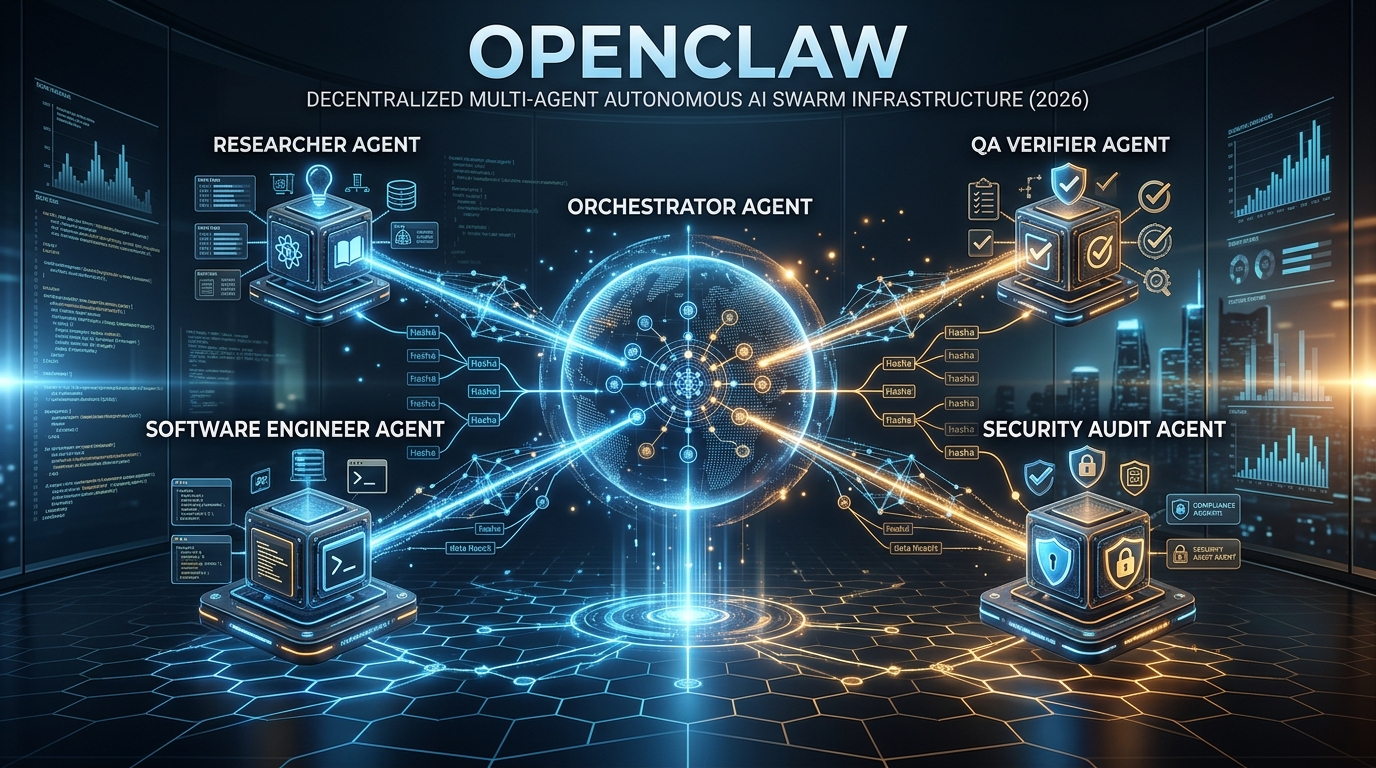
What makes open agent stacks exciting is inspectability. Prompts, tools, state, retries, logs, and failures can become part of the engineering surface instead of a hidden SaaS behavior. OpenClaw’s distinctive shape is the Gateway: sessions, channels, tools, and events as a control plane, with the assistant reachable from the chat apps you already use.
The next phase is not “agents that never stop.” It is agents teams can constrain, evaluate, and trust—especially when a skill can read files, drive a browser, or run shell commands.
TL;DR
Judge OpenClaw-like systems on five control surfaces: tool permissions, task boundaries, observability, evaluation, and human review points. Community skills move fast when scopes are clear. Local customization beats universal-agent myths. Plugin ecosystems become security risks when permissions are vague. Autonomy is a dial, not a trophy. Viral growth increases supply-chain and skill-vetting pressure; it does not reduce it.
What Shines (When Built Well)
Inspectable loops
Closed products can hide tool calls behind a polished summary. Open implementations can expose the chain: plan → tool → result → next plan. That chain is how you debug. If you cannot replay the loop, you do not own the automation.
Channels as the real UX
Meeting the user in WhatsApp or Slack is a product insight, not a gimmick—provided identity, group vs DM policy, and exfiltration risks are designed deliberately.
Local customization
Teams do not need a universal agent. They need an agent that knows their monorepo commands, lint gate, deploy checklist, and definition of done. Open frameworks win when that adaptation is first-class and reviewable.
Autonomy without the first three is a liability score, not a feature score. Scores are my judgment.
What I Would Watch
- Vague plugin permissions — "full filesystem" and "full network" as defaults are red flags.
- Unmeasurable goals — "improve the codebase" is not a task; "make
npm testpass" is. - Hidden retries — silent re-planning can burn tokens and mutate state twice.
- Weak defaults — power users will configure safety; new users will inherit danger.
- Skill marketplace hygiene — a README GIF is not production error handling; unvetted skills are supply chain.
- Always-on messaging access — a compromised agent with chat + shell is a high-value incident.
The Five-Question Evaluation Checklist
Before I would put an OpenClaw-like agent near a production repo or a personal inbox:
1. What tools can it call? Enumerate them. If the list is "anything," stop. 2. How is permission granted? Per session, per tool, per path, per network host? 3. What logs does it leave? Prompts, tool args, diffs, exit codes, timestamps. 4. How are failures retried? Caps, backoff, human escalation, rollback. 5. What verification command proves done? Tests, lint, typecheck, Lighthouse, screenshot diff.
If a framework cannot answer those five in documentation and code, it is not ready for serious work.
The Workflow I Would Use
1. Define the job with a success command (tests green, PR opened, report written). 2. Grant the minimum tools required for that job. 3. Run in a dry-run, sandbox, or branch-only mode first. 4. Require a verification step before any merge, deploy, or outbound message that looks official. 5. Store a trace artifact next to the PR or change log. 6. Only then expand autonomy one notch (for example, allow formatting commits but not dependency upgrades).
Architecture Sketch for a Trustworthy Open Agent
1. Planner — turns a ticket into steps, cannot write files. 2. Worker — can edit files inside an allowlist, cannot talk to production networks. 3. Verifier — runs tests, lint, typecheck, and screenshot checks; returns structured pass/fail. 4. Publisher — opens a PR or draft only after verifier pass and human approval for high-risk areas.
Most demos collapse these into one chatty process with shell access. Fine for toys. Bad default near secrets, payments, or customer data.
Failure Modes I Keep Seeing
- Infinite polish loops because “done” was never defined
- Context pollution from dumping the entire monorepo into the prompt
- Privilege escalation by convenience (
--dangerously-skip-permissionsleft behind after a demo) - Eval theater that scores “looks like a fix” instead of “canonical suite passed”
- Skills that request more scope than the task needs
Things I Learned
- A useful agent is a constrained worker, not an unconstrained explorer.
- Observability is a feature: traces, diffs, decisions, test results.
- The best open-source advantage is inspectability, not hype.
- Evaluation loops are product infrastructure.
- Separating planner, worker, verifier, and publisher makes autonomy safer than one omniscient process.
How I Would Apply This
In a production repo (including this portfolio stack):
- Tool permissions first (read files, run tests, never touch
.env) - Success criteria first (
npm run check, Playwright smoke, security scan) - Repo-specific skills second
- Human review on auth, billing, or public copy
- A written allowlist of directories the agent may touch
Bottom Line
Open-source agents will win when they make automation understandable. The point is not maximum autonomy; it is automation the team can trust. If the framework cannot show its work, it does not deserve write access—or inbox access.
Sources and framing
- OpenClaw and github.com/openclaw/openclaw — primary project surfaces (verify current security model before adoption)
- Naming history and ecosystem claims vary across secondary writeups; prefer current docs over viral posts
- Related patterns: tool-using LLM agents, sandboxing, software supply-chain hygiene for skill/plugin ecosystems