
Katha grantha
Ganesha Katha
गणेश कथा
Obstacle, wit, and eight roads in Maharashtra
Ganapatya chapters for beginnings, clay ethics, and Ashtavinayak as a real circuit.
Chapter 1
The guardian at the door
द्वारपाल
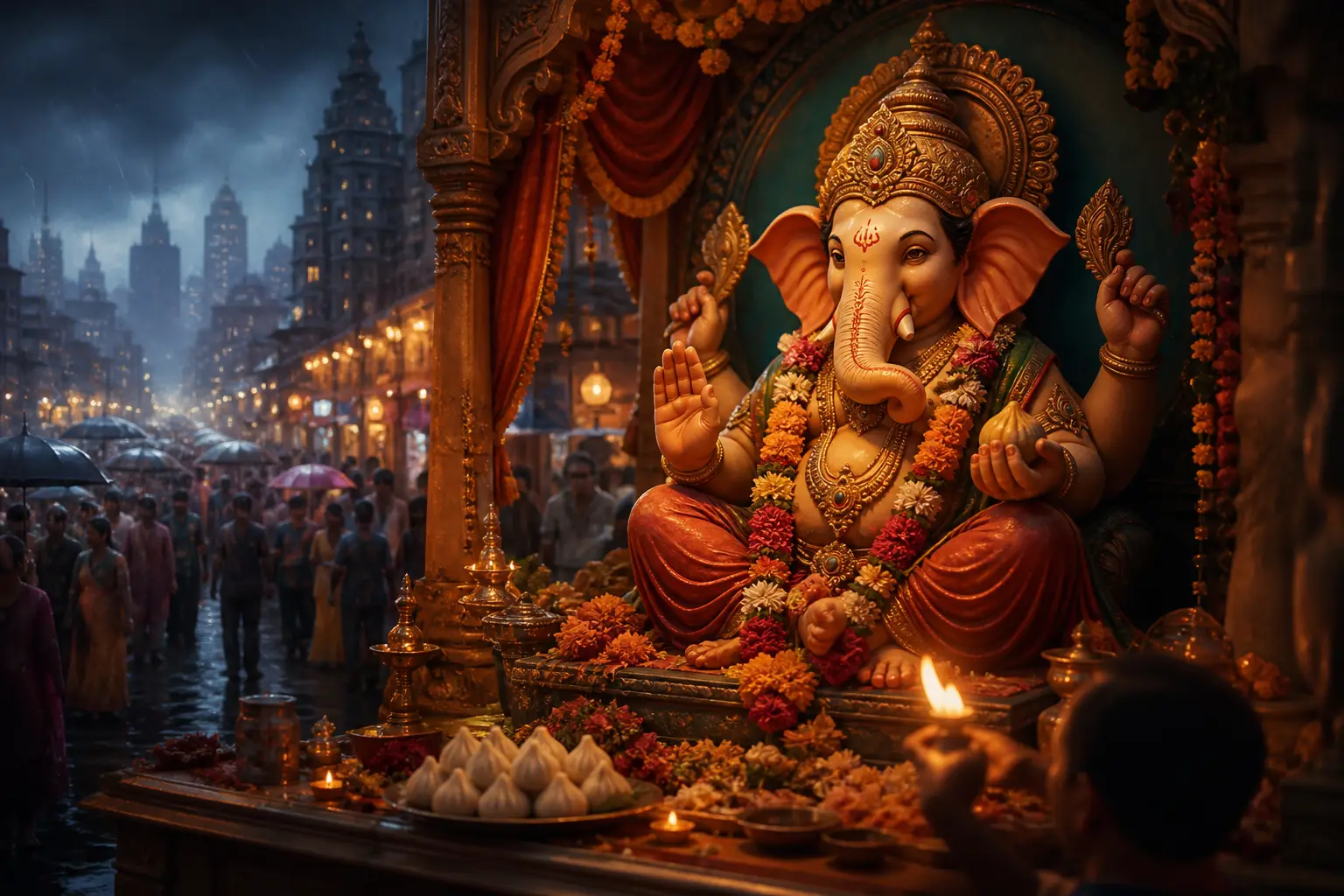
Pārvatī forms a guardian; a contest with Śiva ends in a new head — an elephant’s — and a god who remembers both wound and wisdom. Other Purāṇic tellings exist. Together they teach that the one who removes obstacles first knows what an obstacle is.
Gaṇeśa sits at thresholds: new ledgers, new journeys, new manuscripts. The Mahābhārata scribe legend — Vyasa dictating, Gaṇeśa writing without pause — is a story about attention. Dense verses force the scribe to think. Learning is not stenography.
Begin rites with Gaṇapati not as superstition insurance, but as naming the work’s friction before you pretend the road is smooth.
- Ganesha birth narratives in Purana tradition
- Mahabharata scribe motif (tradition)
Ask about this section
Ganesha Katha · The guardian at the door
Names the people and the event in this section, then says what the page does not include. It will not invent missing verses.
Chapter 2
Clay, city, and the visarjan vow
मृत्तिका
Ganesh Chaturthi in Maharashtra became civic language through sarvajanik pandals — public devotion that also taught satire, solidarity, and neighbourhood art. Tilak’s era scaled what homes already loved.
Modaka and durva remain classic offerings. The modern ethical test is clay: natural clay returns to water; plaster poisons lakes. Visarjan day is bhakti plus civic duty. Blocking ambulances is not devotion.
When the murti leaves, the empty corner of the home teaches non-attachment more sharply than a slogan. Keep the aarti book open anyway — Hind AI’s Marathi sangrah is for the whole year.
- Sarvajanik Ganeshotsav civic history
- Hind AI /festivals/ganesh-chaturthi and /ganesh-aarti
Ask about this section
Ganesha Katha · Clay, city, and the visarjan vow
Names the people and the event in this section, then says what the page does not include. It will not invent missing verses.
Chapter 3
Eight forms, one circuit
अष्टविनायक
Mayureshwar to Mahaganapati — eight living Ganapatis form a Maharashtra road story with a traditional order. Distances are real. Village temple hours are real. Treating the yatra as a selfie checklist insults both map and murti.
Each halt keeps a local mahātmya: peacock legends, ballala devotion, hill caves, river crossings. Read one local story per halt, then walk. That is how geography becomes memory.
Obstacle-removal that cannot wait in a queue has already failed the lesson.
- Ashtavinayak circuit living pilgrimage
- Hind AI /ganesha map and place pages
Ask about this section
Ganesha Katha · Eight forms, one circuit
Names the people and the event in this section, then says what the page does not include. It will not invent missing verses.