
April · pan-hindu · major
Akshaya Tritiya
अक्षय तृतीया
Sunday, 19 April 2026
Vaishakha Shukla Tritiya (local sunrise rules can shift the civil day)
How to read this page: Katha = scripture / oral tradition. Living practice and temple notes = custom that varies by place. Civil dates move with the panchanga — confirm locally when a tithi straddles two sunrises.
The day deeds are called ‘never diminishing’
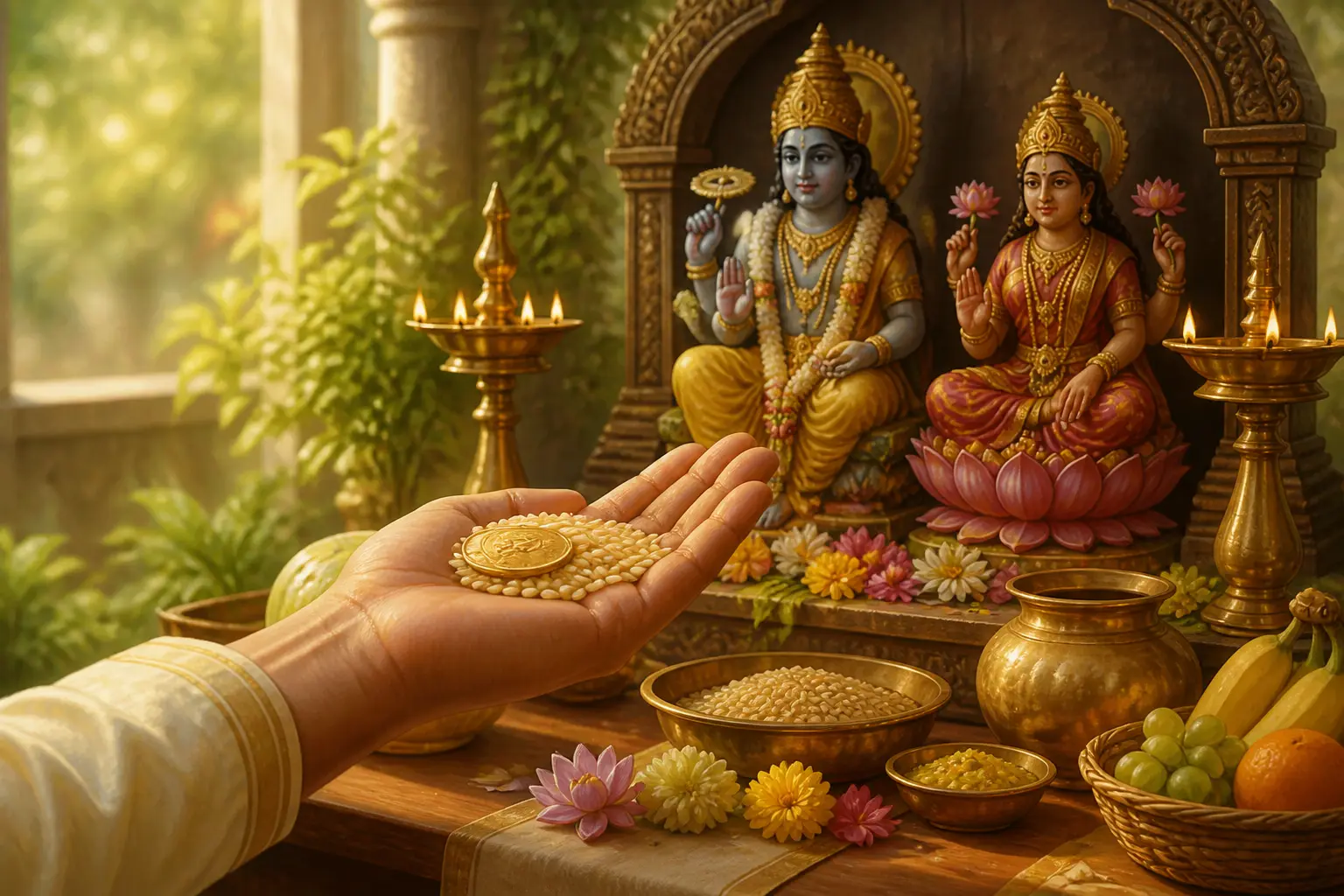
An auspicious open day for beginnings, charity, and — in modern India — gold. Older texts emphasise dana and Vishnu-Kubera prosperity motifs.
Origin / katha
Tradition — Purāṇa, itihāsa, or oral mahātmya — not a dated news report
Padma Purāṇa and related mahātmyas praise acts done on Akshaya Tritiya as akṣaya — inexhaustible. Treta Yuga’s beginning is sometimes placed here in Purāṇic chronology. Treat that as sacred time-myth, not geology.
Living practice
How people actually keep the day
Temple visits, river baths, buying metal or tools, starting ledgers. Farmers and traders mark account books. Jain communities also observe the day with distinct narratives.
In the temple
What a first-time visitor usually meets
Vishnu and Lakshmi shrines see steady morning crowds. Less theatrical than Diwali; more transactional calm.
Do
- Give a real gift of food or learning if you buy gold
- Start a study or seva vow that you can keep
Don’t
- Do not equate the festival only with jewellery ads
- Do not take on debt you cannot carry just because the day is ‘lucky’
Fun facts
- ‘Akshaya’ names both the tithi’s fame and the wish that merit not decay.
- Some regions link the day to the first ploughing or river descent myths.
Regions
Pan-India
Keep learning on Hind AI
Sources
- Padma Purana akshaya-tithi mahatmya (tradition)
- 2026 India festival calendar listings (19 Apr civil day; verify local tithi)