
October · pan-hindu · vrat
Karwa Chauth
करवा चौथ
Thursday, 29 October 2026
Kartik Krishna Chaturthi — moonrise fast-breaking
How to read this page: Katha = scripture / oral tradition. Living practice and temple notes = custom that varies by place. Civil dates move with the panchanga — confirm locally when a tithi straddles two sunrises.
A day’s fast for a partner’s long life — moonrise as the hinge
Observed widely in North India, Karwa Chauth is a sunrise-to-moonrise fast kept especially by married women, with sargi, sieve, and moon-sight rituals.
Origin / katha
Tradition — Purāṇa, itihāsa, or oral mahātmya — not a dated news report
Folk and later Purāṇic-flavoured tellings speak of Savitri, of queens and karwa pots, and of the ethic of mutual protection in marriage. These are narrative supports for a living vrata — not uniform history across every district.
Living practice
How people actually keep the day
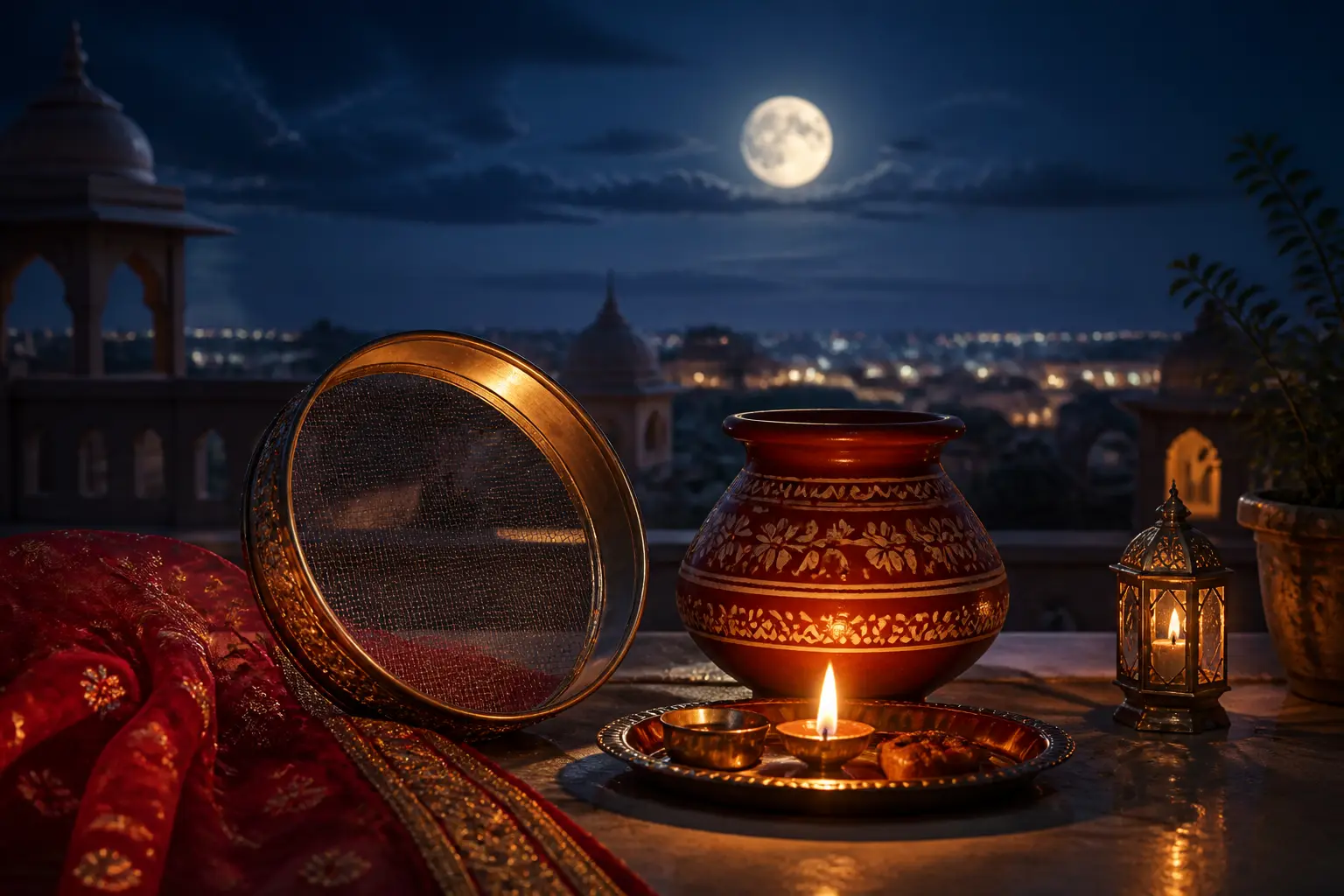
Pre-dawn sargi meal, day-long fast (often without water in stricter homes), evening mehfil with friends, then moonrise sighting through a sieve before water and food. Urban practice increasingly emphasises consent and health.
In the temple
What a first-time visitor usually meets
Some visit Shiva-Parvati or Gauri shrines; much of the rite is domestic and rooftop. Moonrise timing is local — check a city panchanga, not a national meme.
Do
- Prioritise health — modify the fast if pregnant, ill, or advised by a doctor
- Treat the vow as mutual care, not one-sided pressure
Don’t
- Do not shame women who do not keep the fast
- Do not confuse Instagram aesthetics with the vow’s ethic
Fun facts
- Karwa refers to the earthen pot / vessel central to many ritual sets.
- Moonrise can differ by an hour across Indian longitudes — local sky wins.
Regions
Punjab · Haryana · Rajasthan · UP · Delhi NCR · diaspora
Keep learning on Hind AI
Sources
- North Indian Karwa Chauth living custom
- 2026 Kartik Krishna Chaturthi listings (29 Oct)