
March · vaishnava · major
Holi
होली
Wednesday, 4 March 2026
After Holika Dahan on Phalguna Purnima evening (2026-03-03)
How to read this page: Katha = scripture / oral tradition. Living practice and temple notes = custom that varies by place. Civil dates move with the panchanga — confirm locally when a tithi straddles two sunrises.
Fire of Holika, colours of spring, and Prahlada’s faith
Holika Dahan burns fear; the next day colours and embraces reset social distance. Barsana’s Lathmar and Bengal’s Basanta Utsav are cousins, not copies.
Origin / katha
Tradition — Purāṇa, itihāsa, or oral mahātmya — not a dated news report
Vishnu Purāṇa and Bhāgavata traditions tell of Prahlāda, Holikā’s fire, and Narasimha’s protection. Holi’s joy is also tied to Krishna’s play in Vraja in later bhakti poetry. That is sacred story and song — not a forensic report.
Living practice
How people actually keep the day
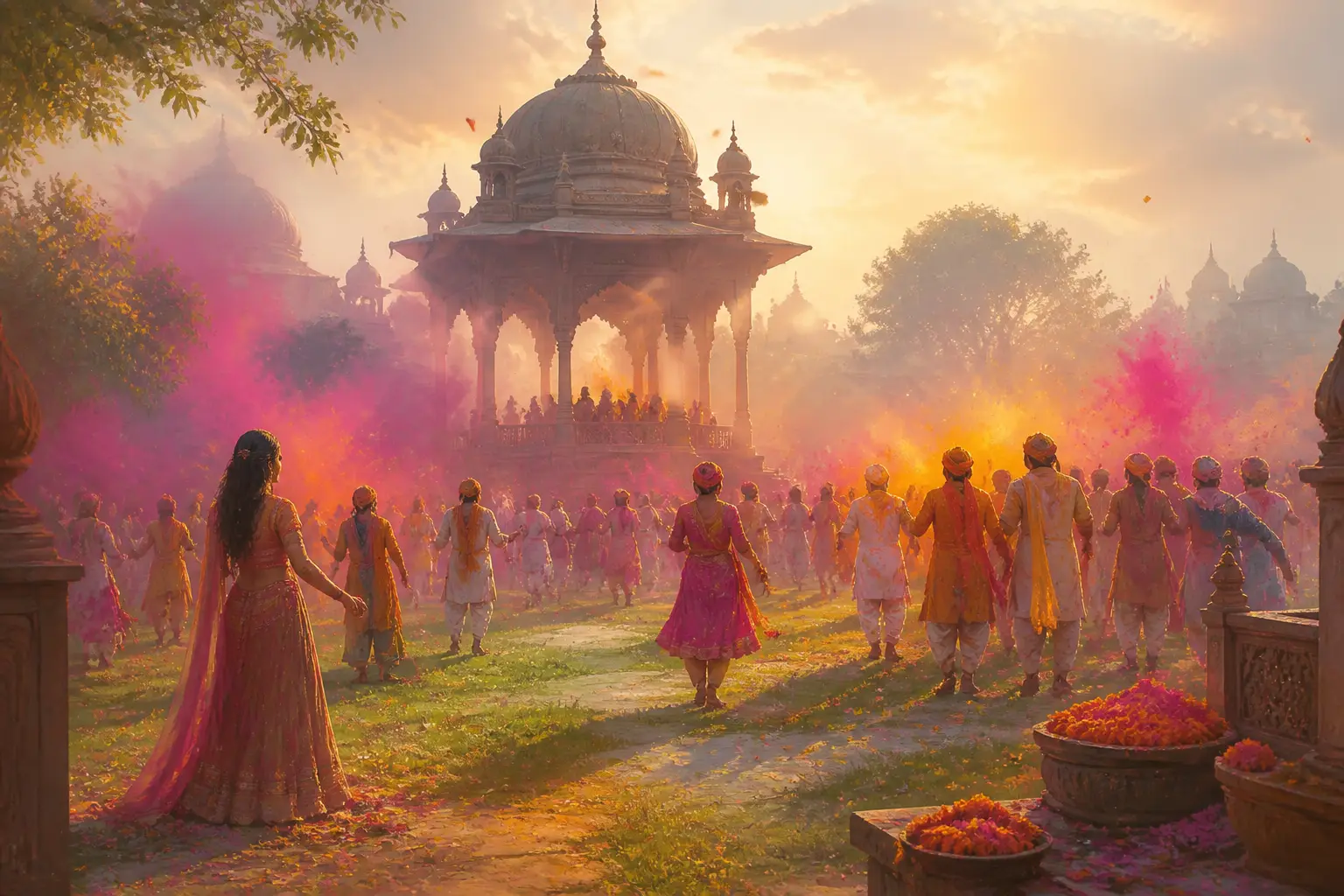
Community bonfires, gulal, gujiya, and visiting. Eco-colour movements grow each year. Some regions play Holi for more than one day.
In the temple
What a first-time visitor usually meets
Krishna temples in Mathura-Vrindavan are ecstatic and crowded. Shaiva temples may stay quieter. Protect cameras and phones; coloured water reaches everywhere.
Do
- Ask consent before smearing colour on strangers
- Use skin-safe colours
- Forgive small debts of the year if that is your custom
Don’t
- Do not force entry into gendered or family-only Holi circles
- Do not mix alcohol coercion with ‘festival spirit’
- Do not burn unsafe plastics in Holika pyres
Fun facts
- Holika Dahan and Rangwali Holi are two linked days — many calendars list both.
- Yaosang in Manipur and Basanta Utsav in Santiniketan show how spring colour travels beyond one script.
Regions
Pan-India · Braj · Bengal · Punjab · Manipur
Keep learning on Hind AI
Sources
- Bhagavata / Vishnu Purana Prahlada-Holika motif (tradition)
- Regional Holi ethnography (Braj, Bengal, Punjab)
- 2026 Holika Dahan 3 Mar / Holi 4 Mar public listings