
September · ganapatya · major
Ganesh Chaturthi
गणेश चतुर्थी
Monday, 14 September 2026
Bhadrapada Shukla Chaturthi; visarjan often Anant Chaturdashi
How to read this page: Katha = scripture / oral tradition. Living practice and temple notes = custom that varies by place. Civil dates move with the panchanga — confirm locally when a tithi straddles two sunrises.
Clay, modaka, and the city that sings Ganapati Bappa
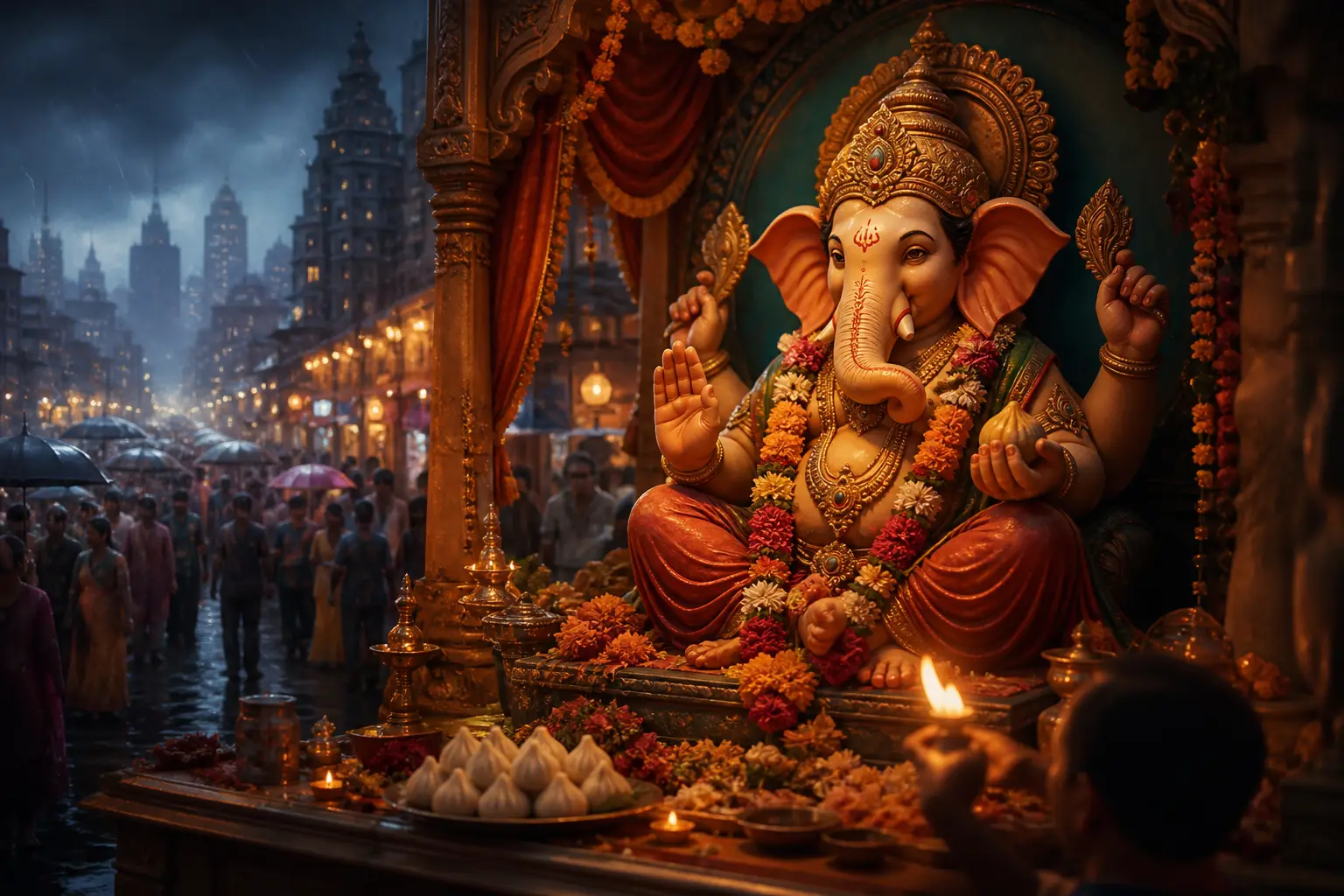
Maharashtra’s public sarvajanik festival made Ganesha a civic language. Homes and pandals install clay murtis for days, then immerse.
Origin / katha
Tradition — Purāṇa, itihāsa, or oral mahātmya — not a dated news report
Purāṇic tellings of Ganesha’s birth from Parvati, the beheading and elephant head, and his writing of the Mahābhārata for Vyasa are classic Ganapatya katha. They teach wit, obstacle-removal, and learning — not zoology.
Living practice
How people actually keep the day
From 1.5 to 10+ days of worship. Modaka, durva grass, and aarti. Eco-clay movements respond to lake pollution. Visarjan processions need civic care.
In the temple
What a first-time visitor usually meets
Ashtavinayak temples and local Ganapati mandirs are packed. Pandal art is a living museum of satire and bhakti. Expect loudspeakers and dense crowds.
Do
- Choose natural clay if you install a murti
- Keep visarjan lines safe and sober
- Learn one Ganapati atharvashirsha verse with humility
Don’t
- Do not immerse plaster-of-Paris idols in drinking-water lakes
- Do not block ambulances during processions
- Do not mock other families’ visarjan day choices
Fun facts
- Lokmanya Tilak’s era scaled sarvajanik Ganeshotsav as public culture in Pune-Mumbai.
- Anant Chaturdashi often closes the cycle with immersion and Vishnu’s Ananta vow in some homes.
Regions
Maharashtra · Goa · Karnataka · Telugu states · Diaspora
Keep learning on Hind AI
Sources
- Ganesha Purana / Mudgala motifs (tradition)
- Sarvajanik Ganeshotsav civic history
- 2026 Bhadrapada Shukla Chaturthi listings (14 Sep)