November · pan-hindu · major
Bhai Dooj
भाई दूज
Wednesday, 11 November 2026
Kartik Shukla Dwitiya — Yama Dwitiya in many almanacs
How to read this page: Katha = scripture / oral tradition. Living practice and temple notes = custom that varies by place. Civil dates move with the panchanga — confirm locally when a tithi straddles two sunrises.
Tilak and protection — the Diwali cluster’s sibling day
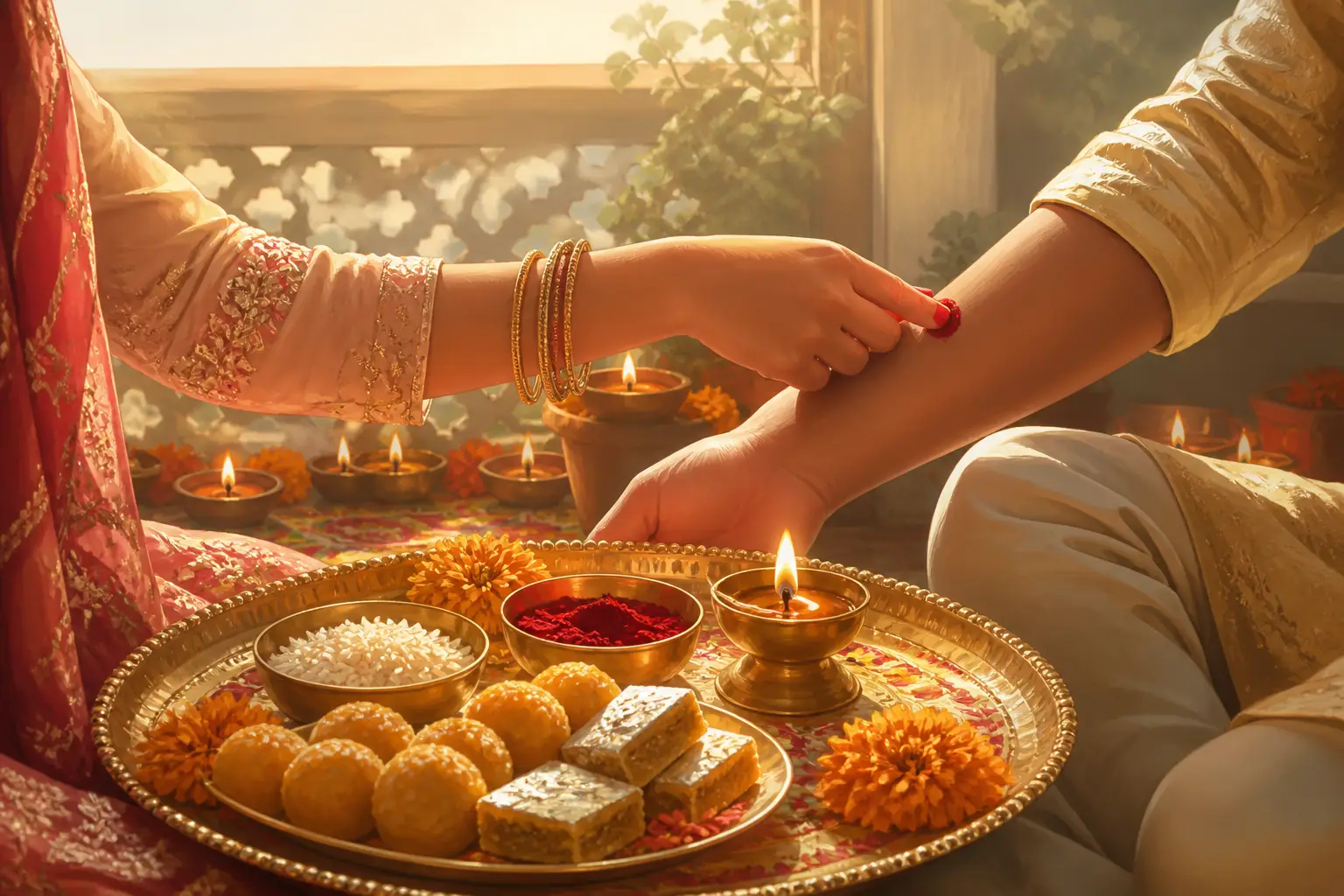
Sisters mark brothers’ foreheads; brothers renew care. The day closes many families’ five-day Diwali arc.
Origin / katha
Tradition — Purāṇa, itihāsa, or oral mahātmya — not a dated news report
Tellings speak of Yama visiting sister Yamuna, and of the ethic that death itself honours a sibling bond. Treat this as sacred folklore teaching protection — not a literal timetable of the afterlife.
Living practice
How people actually keep the day
Tilak, aarti, sweets, and gifts. Regional names include Bhai Tika and Bhau Beej. Some families include cousins and chosen siblings.
In the temple
What a first-time visitor usually meets
Mostly a home festival. Yamuna-bank cities may see special visits; elsewhere the living room is the sanctum.
Do
- Make the blessing mutual — ask what care your sibling actually needs
- Include those without brothers/sisters through friendship rites if that is your custom
Don’t
- Do not reduce the day to gift receipt value
- Do not force the rite on estranged relatives as public theatre
Fun facts
- Bhau Beej in Maharashtra keeps a distinct food and aarti flavour within the same tithi family.
- It mirrors Raksha Bandhan’s protection ethic on the opposite side of the year.
Regions
Pan-India · Nepal (related sibling rites)
Keep learning on Hind AI
Sources
- Yama-Yamuna sibling motif (tradition)
- 2026 Kartik Shukla Dwitiya listings (11 Nov)